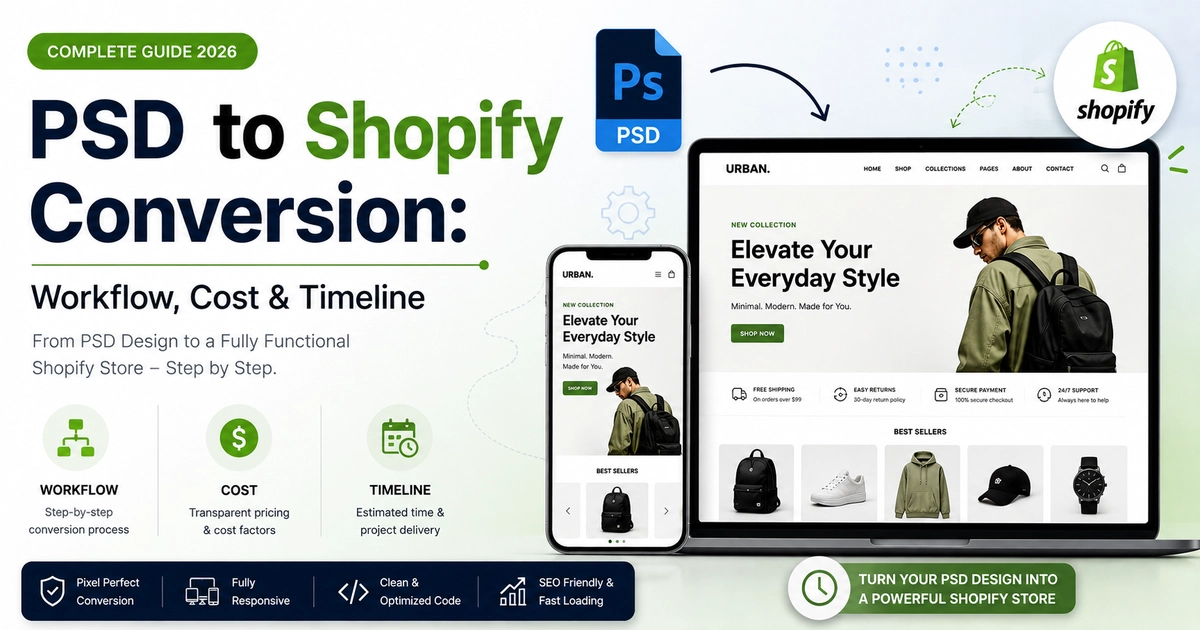
Professional PSD to Shopify conversion typically costs between $500 and $2,500 (₹40,000 to ₹2,00,000 INR) and takes 5 to 14 business days depending on catalog size and custom functionality. The process involves slicing assets into WebP, building responsive Shopify Theme Architecture 2.0 JSON templates, coding custom modular Liquid sections, and integrating checkout and inventory systems.
Key Takeaways
- Translates legacy PSD layouts into modern Shopify Online Store 2.0 JSON schema sections.
- Eliminates outdated slicing techniques in favor of modular HTML5, CSS variables, and native Liquid tags.
- Enables store merchants to customize section copy, imagery, and product blocks in the theme editor.
- Ensures full cross-browser compatibility across Safari iOS, Chrome Android, Firefox, and Edge.
For high-growth e-commerce brands, visual differentiation is everything. Pre-built, off-the-shelf Shopify themes look generic and restrict brand storytelling. When designers create a bespoke digital storefront in Adobe Photoshop (PSD), turning those static artboards into a high-converting, blazing-fast Shopify store requires deep expertise in Shopify Liquid, Online Store 2.0 (OS 2.0) architecture, and modern front-end engineering.
At CV World, we convert custom Photoshop mockups into robust, client-customizable Shopify themes that empower merchants to modify banners, products, and promotions without touching code. In this comprehensive developer and merchant guide, we break down the end-to-end workflow, timeline, and cost structure for PSD to Shopify development in 2026.
1. PSD to Shopify Cost & Timeline Matrix (2026)
Project scopes vary depending on whether you require a simple starter shop or an enterprise-grade omnichannel flagship store:
| Scope Level | Key Deliverables | Estimated Timeline | Estimated Pricing |
|---|---|---|---|
| Essential Storefront | Homepage, Product Page, Collection Grid, Cart Drawer, standard policy pages | 5 – 7 Business Days | $500 – $950 / ₹40,000 – ₹78,000 |
| Advanced Custom Store | Custom Mega-Menu, AJAX Cart Drawer with cross-sells, Quick View, Custom Product Bundles, 8+ Custom Liquid Sections | 8 – 14 Business Days | $1,000 – $2,000 / ₹82,000 – ₹1,65,000 |
| Enterprise / High-SKU Brand | Custom ERP / CRM API integrations, Advanced Variant Selectors, Custom Subscriptions, B2B wholesale portal | 15 – 25 Business Days | $2,500+ / ₹2,00,000+ |
2. The Professional Step-by-Step Conversion Workflow
Step 1: Layer Analysis & E-Commerce Asset Extraction
Before coding, our developers audit the Photoshop artboard. We inspect hover states, mobile drawer behaviors, dropdown menus, and cart popups. Icons are sliced into clean, lightweight SVGs, and brand photography is compressed to modern WebP assets to ensure rapid product image rendering.
Step 2: Shopify Online Store 2.0 (OS 2.0) Architecture
Modern Shopify development relies on modular JSON templates instead of rigid legacy Liquid files. We construct dynamic sections allowing merchants to drag, reorder, and hide elements anywhere on any page via the Shopify Theme Customizer:
// Example schema for custom promotional section
{
  "name": "Featured Promo Banner",
  "settings": [
    {
      "type": "text",
      "id": "heading",
      "label": "Section Heading",
      "default": "Special Offer"
    },
    {
      "type": "image_picker",
      "id": "promo_image",
      "label": "Promotion Graphic"
    }
  ],
  "presets": [
    {
      "name": "Featured Promo Banner"
    }
  ]
}
Step 3: Responsive Front-End Coding (HTML5 / Modern CSS / Vanilla JS)
Using mobile-first CSS architecture, we build fluid grid systems that adapt effortlessly across smart devices, tablets, laptops, and ultra-wide desktops. We eliminate heavy jQuery libraries, implementing native Vanilla JavaScript for AJAX cart updates, sticky headers, and variant selectors.
Step 4: AJAX Cart & High-Conversion E-Commerce Features
To maximize sales conversion, we integrate:
- Slide-out AJAX Cart Drawer: Customers see items instantly added without full page reloads, accompanied by dynamic free-shipping progress bars.
- Color Swatches & Variant Selectors: Accurate image switching upon selecting product color, size, or pack quantities.
- Sticky Add-to-Cart Bar: Persistent buy button on long-scrolling product detail pages on mobile screens.
Step 5: App Integration & Checkout Configuration
We configure payment gateways (Stripe, PayPal, Cashfree, Razorpay), regional tax rules, shipping profiles, and review apps (Judge.me, Loox, Yotpo) without bloating theme code.
3. Why Hand-Coded Shopify Themes Convert Better
Pre-packaged marketplace themes are weighed down by hundreds of unused settings, styles, and scripts designed to cater to thousands of unrelated businesses. A bespoke PSD to Shopify conversion provides:
- Superior Core Web Vitals: Minimal CSS payloads and lean JavaScript yield 85+ mobile PageSpeed scores, reducing ad bounce rates.
- Zero App Clutter: Native Liquid implementation of announcement bars, FAQ accordions, and related products eliminates recurring monthly app subscription fees.
- Tailored Brand Identity: 100% adherence to your design system ensures your brand stands apart from generic dropshipping competitors.
Need experienced Shopify developers to convert your design files? Explore our specialized Shopify development services or consult with our lead engineers today.
Shopify Online Store 2.0 JSON Template Hierarchy
In modern Shopify development, every page is rendered via structured JSON templates located in the /templates directory. These JSON files reference individual modular Liquid sections from the /sections folder, allowing merchants to customize block sequences without altering core theme code. When converting complex PSD designs, our team builds clean, reusable Liquid sections that empower store owners to launch seasonal sales campaigns effortlessly.
PSD to Shopify vs Direct Page Builder Conversion
| Criterion | Hand-Coded Shopify 2.0 | Third-Party Page Builder App |
|---|---|---|
| Mobile Load Speed | Sub-second (95+ PageSpeed) | 3.5s – 5.5s (Heavy JS wrappers) |
| Recurring Costs | $0 / month (Native theme code) | $29 – $99 / month recurring subscription |
| Merchant Editability | Full dynamic JSON schema blocks | Confined to proprietary app interface |
| Long-Term Stability | Immune to third-party app shutdowns | Store breaks if builder app is removed |
Frequently Asked Questions
Yes. All templates are constructed using Shopify Online Store 2.0 architecture with customizable JSON schemas. You can update images, text, promotions, and banners directly via the native visual Shopify Theme Customizer.
Yes. We execute test transactions via Shopify Bogus Gateway or test API credentials to verify that payments, taxes, shipping calculation, inventory deduction, and customer confirmation emails function flawlessly.
Yes. We provide complete migration support to transfer existing products, categories, historical customer records, and order histories safely to your new Shopify store.
Standard Shopify plans allow checkout branding (logos, fonts, brand colors). Full code-level checkout customization via Shopify Checkout UI Extensions is available on Shopify Plus plans.
No. When implemented using modern clean-code standards, responsive Flexbox containers, and server-side caching, your website maintains rapid sub-second loading speeds and easily passes Google Core Web Vitals assessments.
Need Expert Development, Speed Optimization or Custom Migration?
Talk directly with CV World lead engineers. Get a transparent, fixed-price quote with guaranteed 90+ Core Web Vitals and zero obligation.